
Tenafly Veterinary Center | October 28, 2026
Have you ever settled onto the couch, only to have your cat climb into your lap and start pressing their paws against you? One paw goes down, then the other, almost like they’re working with a tiny ball of dough. Cat owners often call this behavior “making biscuits,” and it’s one of the many curious habits that make cats so entertaining.
But why do cats knead? Is it a sign of happiness, a leftover habit from kittenhood, or something else entirely?
Cats knead for several reasons, including comfort, relaxation, scent marking, and natural instincts developed early in life. Most of the time, kneading is harmless and reflects a cat’s emotional state. Understanding this behavior, along with other unusual feline habits, can help you recognize what your cat is communicating and when a behavioral change deserves attention.
Why Do Cats Knead With Their Paws?
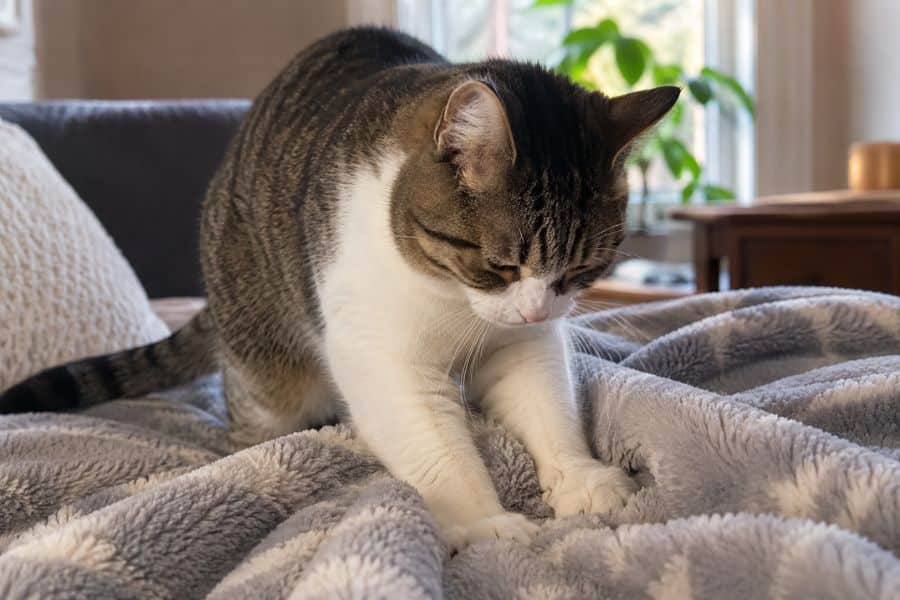
Kneading is a repetitive movement in which cats push their front paws against a soft surface, often alternating between left and right. Some cats extend their claws while kneading, while others keep them tucked away.
You might notice your cat kneading a blanket, pillow, bed, or even your stomach. Some cats purr loudly during the process, while others become quiet and focused.
The behavior begins during kittenhood, but many cats continue kneading throughout adulthood.
1. Kneading Begins During Kittenhood
Newborn kittens instinctively knead their mother’s belly while nursing. The gentle pressing motion helps stimulate milk flow, making kneading an important part of their earliest feeding experiences.
As kittens grow, they begin eating solid food and no longer need to knead for milk. However, the behavior often remains associated with warmth, safety, and comfort.
Adult cats may repeat this familiar movement when they feel relaxed or secure.
Think about your cat’s favorite sleeping spot. Do they knead the blanket before curling up? That familiar movement may be connected to the comforting experiences of early life.
2. Kneading Can Be a Sign of Comfort and Happiness
One of the most common reasons cats knead is that they feel comfortable.
A cat resting in a warm, quiet environment may begin pressing their paws into a soft surface while purring. Their body usually appears relaxed, and their eyes may be partially closed.
Kneading often happens during peaceful moments, such as:
- Resting on a favorite blanket
- Sitting in a familiar person’s lap
- Preparing for a nap
- Receiving gentle petting
- Relaxing in a warm sleeping area
Does your cat start kneading whenever you sit down together? They may associate your presence with comfort and security.
Kneading alone does not prove that a cat is happy. Their posture, facial expression, tail movement, and overall behavior provide a clearer picture.
3. Cats Use Kneading to Mark Their Territory
Cats communicate through scent as well as body language.
Their paws contain scent glands that release chemical signals when they scratch or press against surfaces. These signals help cats identify familiar objects and areas.
When your cat kneads a favorite blanket or sleeping spot, they may leave behind their scent.
This behavior is part of how cats interact with their surroundings.
A cat that repeatedly kneads the same pillow may be reinforcing its familiarity through scent marking. The behavior does not necessarily mean the cat is being possessive or aggressive.
4. Kneading May Help Cats Prepare a Comfortable Sleeping Spot
Wild cats and their ancestors often rested in outdoor environments where grass, leaves, and other materials formed their sleeping areas.
One explanation for modern kneading is that the pawing motion resembles the instinctive behavior of pressing down vegetation before resting.
Domestic cats no longer need to flatten grass to make a comfortable bed, but some may retain similar movements.
You might see your cat circle a blanket, knead it several times, and settle into a curled position.
This routine is usually harmless and may be part of how your cat prepares to sleep.
Why Does My Cat Knead Me Instead of a Blanket?
If your cat chooses your lap over every soft blanket in the house, you may wonder whether the behavior has a special meaning.
Cats often knead people they feel comfortable around. Your warmth, familiar scent, and gentle attention may make your lap an appealing resting place.
Some cats knead while being petted, while others climb onto their owners and begin kneading without any encouragement.
Does Kneading Mean My Cat Loves Me?
Kneading can be associated with affection and trust, but it is not a direct measurement of how much a cat loves someone.
A cat that kneads your lap while purring, resting comfortably, and seeking attention is likely enjoying the interaction.
Other cats show affection differently. Some prefer sitting nearby, rubbing against your legs, following you around the house, or sleeping close to you.
A cat that rarely kneads can still have a strong bond with their family.
Why Do Cats Knead and Bite Blankets?
Have you noticed your cat kneading a blanket while holding part of it in their mouth?
This behavior often combines kneading with sucking or chewing on soft fabric.
Some cats develop this habit during kittenhood and continue it as adults. Soft materials may provide a comforting sensation associated with nursing.
Cats may also suck on blankets when they are relaxing or trying to settle themselves.
Occasional blanket sucking is not always concerning. However, swallowing fabric, chewing holes in blankets, or repeatedly eating nonfood materials can create serious health risks.
If your cat begins consuming fabric or cannot stop chewing household materials, arrange a health evaluation. Swallowed fabric can cause an intestinal blockage.
Is Cat Kneading Ever a Sign of Stress?
Kneading is usually associated with comfort, but cats may also use familiar behaviors to settle themselves during stressful situations.
A cat adjusting to a new home, unfamiliar visitors, or changes in daily routines may spend more time kneading a favorite blanket.
The surrounding behavior matters.
For example, kneading while resting peacefully is different from kneading accompanied by hiding, reduced appetite, unusual vocalization, or persistent restlessness.
Watch for changes in frequency and intensity.
If your cat suddenly begins kneading excessively or displays other unusual behaviors, consider whether something in their environment or health has changed.
Other Odd Feline Habits and What They Mean
Kneading is only one of the many behaviors that leave cat owners scratching their heads.
Understanding a few other common habits can make your cat’s actions easier to interpret.
Why Do Cats Suddenly Run Around the House?
Does your cat race across the living room without warning, jump onto furniture, and disappear down the hallway?
These sudden bursts of activity are commonly called “zoomies.”
Cats may experience zoomies after resting, playing, or using the litter box. Younger cats often display this behavior because they have plenty of energy to release.
Short periods of running and jumping are usually normal.
If sudden activity comes with signs of pain, distress, or repeated attempts to escape something, pay closer attention.
Why Do Cats Headbutt People?
When a cat gently presses their forehead or cheeks against you, the behavior is often called head bunting.
Cats have scent glands around their faces. Rubbing their heads against familiar people or objects helps distribute their scent.
Head bunting commonly occurs during friendly interactions.
A cat may rub against your hand, legs, or face when greeting you or seeking attention.
This behavior is different from persistent head pressing against walls or hard objects, which can indicate a serious medical problem and requires prompt attention.
Why Do Cats Chatter at Birds?
Have you ever watched your cat sit near a window and make rapid clicking or chattering sounds while staring at a bird?
This unusual vocalization often appears when cats observe prey they cannot reach.
The behavior may be related to excitement, frustration, or hunting instincts. Researchers have not established one explanation that applies to every cat.
Chattering is generally harmless when it occurs during normal prey-watching behavior.
Why Do Cats Bring Toys to Their Owners?
Some cats carry toys around the house and leave them near their owners.
This behavior may reflect play, hunting instincts, or a desire for interaction.
A cat that drops a toy at your feet may be inviting you to participate in a game.
Regular play sessions with wand toys, soft balls, or other suitable objects can provide physical activity and mental stimulation.
Avoid leaving toys with loose strings or small detachable parts where your cat can swallow them.
Should You Stop Your Cat From Kneading?
In most cases, there is no reason to stop kneading.
It is a natural behavior that helps many cats relax. Punishing a cat for kneading can create unnecessary stress and damage trust.
However, kneading can become uncomfortable when sharp claws press into your skin.
How to Make Kneading More Comfortable
Try these simple adjustments:
- Place a thick blanket between your lap and your cat.
- Keep your cat’s nails trimmed appropriately.
- Offer a soft bed or designated kneading blanket.
- Gently guide your cat toward a comfortable surface.
- Avoid shouting, pushing, or punishing your cat.
- Reward your cat when they settle comfortably in an appropriate spot.
Never declaw a cat to prevent kneading. Declawing involves removing the last bone of each affected toe and can cause lasting pain and other problems.
If you are unsure how to trim your cat’s nails safely, ask your pet’s care team for guidance.
When Does Unusual Cat Behavior Need Medical Attention?
Cats have individual personalities, and many unusual habits are completely normal.
The concern begins when a familiar behavior changes suddenly or appears alongside signs of illness.
Pay attention if your cat:
- Stops eating or drinking normally
- Hides more than usual
- Becomes unusually aggressive
- Shows signs of pain when touched
- Develops repetitive or compulsive behaviors
- Stops grooming
- Experiences sudden changes in litter box habits
- Begins chewing or swallowing nonfood objects
- Becomes unusually restless or withdrawn
Behavioral changes can be linked to pain, illness, stress, or changes in the home.
A sudden change deserves attention even when the behavior itself appears harmless.
Regular checkups and appropriate cat wellness care can help identify health concerns that may influence your cat’s behavior.
Conclusion: Understanding Your Cat’s Unique Habits
Cats have many unusual behaviors, and kneading is one of their most recognizable habits. Whether your cat presses their paws into a blanket, curls up in your lap, or kneads before falling asleep, the behavior often reflects comfort, familiarity, and instincts.
Kneading can begin during nursing and continue throughout adulthood. It may help cats relax, mark familiar surfaces, or prepare a comfortable resting spot.
Other feline habits, including head bunting, chattering, zoomies, and carrying toys, also provide clues about how cats interact with their surroundings.
The most useful approach is to observe your cat’s behavior as a whole. Notice their normal routines, body language, appetite, energy, and response to their environment.
A familiar habit is usually less concerning than a sudden behavior change. When unusual actions appear alongside physical symptoms or signs of distress, professional guidance can help identify the cause.
If your cat develops sudden behavioral changes, appears uncomfortable, or shows signs of illness, book an appointment with your local animal hospital to discuss their health and well-being.
Frequently Asked Questions(FAQ):
1. Why do cats knead blankets before sleeping?
A: Cats often knead blankets before sleeping because the movement is associated with comfort and relaxation. It may also reflect an inherited instinct to prepare a resting area. Many cats knead briefly before settling into their favorite sleeping position.
2. Why does my cat knead me but not other people?
A: Your cat may feel particularly comfortable resting on you because of your familiar scent, warmth, and daily interactions. Cats develop individual preferences, so choosing one person for kneading does not necessarily mean they dislike other family members.
3. Is it normal for adult cats to knead?
A: Yes. Many adult cats continue kneading throughout their lives. The behavior begins during nursing but often remains associated with relaxation, comfort, and familiar surroundings. Some cats knead frequently, while others rarely display the behavior.
4. Why does my cat knead and purr at the same time?
A: Kneading and purring often occur together when cats feel relaxed and comfortable. Both behaviors can also appear in stressful situations, so consider your cat’s body language and surroundings rather than assuming that purring always means happiness.
5. Should I worry if my cat suddenly stops kneading?
A: A cat that stops kneading is not necessarily sick. However, sudden behavioral changes accompanied by reduced activity, appetite loss, hiding, or discomfort deserve attention. Monitor your cat’s overall behavior and arrange a health assessment if other symptoms appear.
Ready to Book an Appointment?
Our veterinary team is here for your pet — from routine care to urgent needs.